
Not Every Child Knows How to Ride a Bike. How Arc Bridges That Gap.
The reasons weren’t about ability. They were about access.
Although the average age when someone learns to bike is 3-7, Arc found that many middle and high-schoolers hadn’t learned to ride a bike. The reasons weren’t about ability. They were about access:
- The cost of a bike
- Neighborhood safety concerns
- Limited supervision
- Pandemic-related skills loss
- Missed developmental milestones
For some students, the moment simply never came. So we built a program to change that.
Arc’s Learn to Bike program is a three-session, on-campus physical education enrichment designed primarily for grades K–3, though its impact reaches far beyond age levels.
We start where confidence begins: balance.
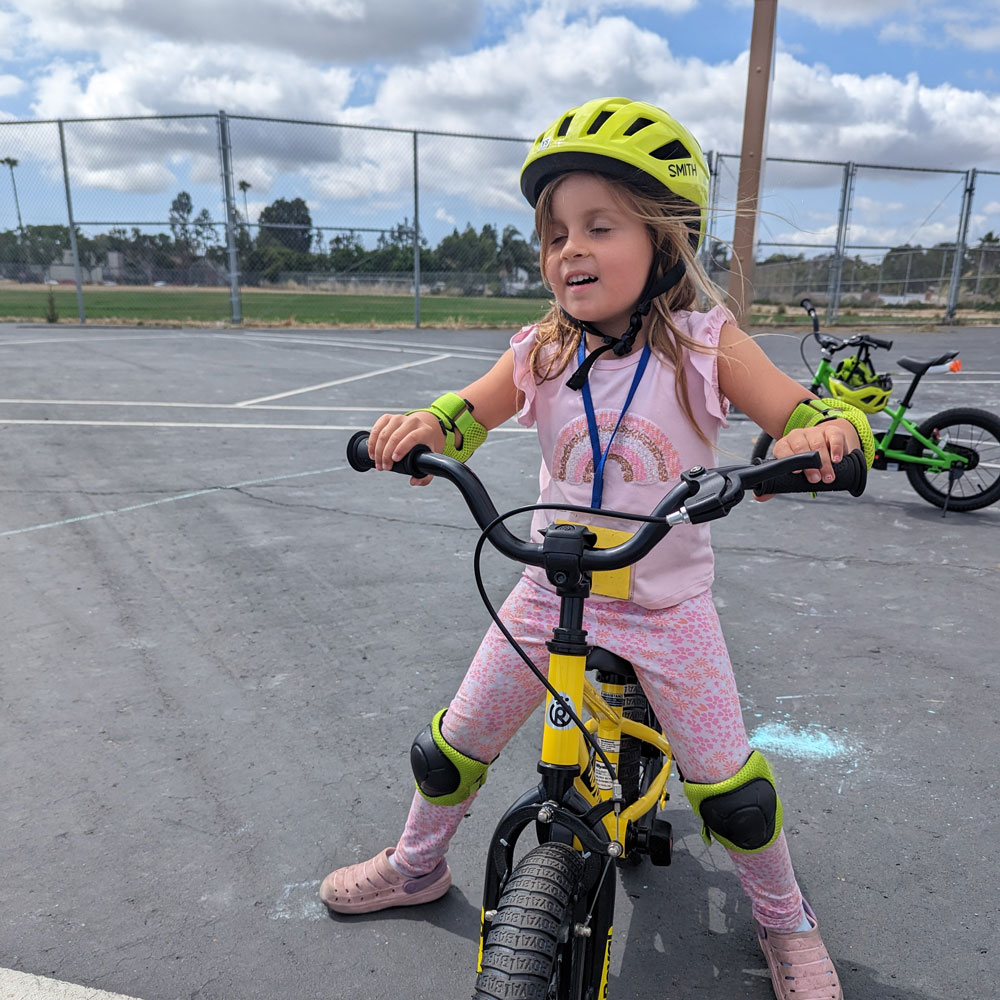
Instead of using traditional bikes with training wheels (which can feel embarrassing for older students who missed the “right” age window), we use a fleet of specialty balance bikes.
Balance bikes don’t have pedals. Students focus first on mastering balance, which is the hardest part of riding. Once that foundation is built, pedaling becomes natural.
The result? Students progress quickly. Fears diminish. Momentum builds.
Designed for Schools. Built for Accessibility.
The program is completely turnkey. We bring:
- A fleet of balance bikes
- Helmets, knee pads, and elbow pads
- Trained instructors
- All materials and safety equipment
There’s no bussing, no field trips, no special facility requirements. We set up directly on your campus on a standard blacktop. Schools don’t need to build infrastructure or any prior experience. Everyone participates in a safe, supportive environment.
Learning to ride a bike is more than a recreational milestone. It builds:
- Confidence and self-esteem
- Physical coordination and strength
- Social connection and recreational access
- A sense of independence
- Alternative transportation skills
- Improved mental health through movement
For some students, it’s their first experience overcoming a visible fear in front of peers and succeeding. That moment changes how they see themselves.